

Maintaining a healthy body isn’t just a luxury — it’s a necessity for productivity, creativity, and overall well-being. In the fast-paced world of freelancing, where the boundaries between work and personal life are blurred, fitness often takes a back seat to deadlines, client meetings, and project deliverables. Amidst the allure of independence, maintaining a healthy lifestyle can often be neglected.
As a freelancer, the sedentary nature of remote work and irregular schedules can pose significant challenges to physical well-being. This guide aims to provide practical insights and actionable advice for freelancers to prioritize their fitness journey within the demands of their professional endeavors. From incorporating movement into daily routines to optimizing the workplace for ergonomic support, discover how to navigate the freelance lifestyle while nurturing your body’s strength, resilience, and longevity.
Expert’s Opinion:
When interviewed by the LA Times about his book “Get Up! Why Your Chair Is Killing You and What You Can Do About It,” Dr. James Levine said, “Sitting is more dangerous than smoking, kills more people than HIV, and is more treacherous than parachuting. We are sitting ourselves to death.”
Levine’s original scientific research shows that today’s chair-based world, where we no longer use our bodies as they evolved to use them, has negative consequences on our health. A low activity rate is a major cause of diabetes, cancer, and heart disease.
Benjamin Franklin famously said, “If you fail to plan, you are planning to fail.” Scheduling your workouts in advance means you’re less likely to leave things to chance and, therefore, less likely to skip them.
If you are a freelancer and you want to keep your body fit, this guide is for you. For freelancers, whose schedules are as fluid as their work environment, developing habits that promote physical health is paramount.
Here are some points you can follow to keep your body fit as a freelancer:
– Develop a Plan
If you desire to remain fit as a freelancer, you have to figure out what you actually want to do. Do you want to work out at home or are you inclined towards going to the gym? Do you like keeping meal plans and setting aside time to cook, or do you plan on dining out? If you work in a co-working space or a coffee shop nearby, you should join yoga classes or a gym near your workplace. The major advantage of freelancing is that you can do pretty much anything you want. So, just make a proper fitness plan and stick to it.
“A goal without a plan is just a wish.”
– Make Your Timing Schedule
One of the best things about freelancing is that you can have full control over your schedule. You have the authority to select what time of the day you go to the gym or take your lunch, dinner, and snack breaks. If you are a night owl and like to work during the night, you can have ample time during the day to exercise. Early morning is the best time for a workout and most of all it doesn’t interfere with your other tasks.
“The key is not to prioritize what’s on your schedule but to schedule your priorities.” – Stephen Covey.
Take Short Breaks
Short breaks can be useful for a freelancer. Taking a break at regular intervals allows your brain, fingers, and eyes to rest. It will enable you to come back with a fresh mind and fresh eyes. If you are not able to stick to a balanced diet, make some effort to add recipes that you love to your menu. You can eat your favorite fruits and make a good stock of salads or veggies. If you have yummy food on your menu, you will look forward to having your meal and will be less likely to skip it in favor of junk food.
It may seem that freelancing and fitness never fit together, but they actually do. Freelancing gives you the opportunity to make your exercise plan accordingly. Take advantage of that flexibility, and become healthier and more productive as a freelancer.
– Setting Up a Workout Schedule
If you’re truly committed to making a change and getting fit, start by creating a workout schedule. Treat your workouts the same way you would your work hours or important meetings. Carve out time for them in advance and pencil them into your calendar or daily routine.
As the famous Benjamin Franklin quote goes, “If you fail to plan, you are planning to fail.” Scheduling your workouts in advance means you’re less likely to leave things to chance and, therefore, less likely to skip them.
Your personal schedule will look different from mine depending on your work and life commitments. It doesn’t matter when it is, but schedule it in and it’s more likely that you’ll actually make it happen.
– Choosing the Right Kind of Exercise
When planning your exercise routine, don’t forget to also think about what kind of exercise you want and need to incorporate into your routine. Just a vague plan to “exercise” is not very likely to motivate you. Be specific about your plan, whether it’s a walk, a run, a yoga class, or some time at the gym lifting weights.
The type of exercise you choose will depend on your fitness level, interests, and fitness goals. Create a varied and interesting routine to get the best results. Choose an exercise you enjoy so it doesn’t feel like a chore.
– Making Time for Movement Throughout the Day
As we discussed above, sitting too much can be a major problem for independent professionals who spend a lot of time on their computers. On days you simply can’t fit a workout into your schedule, make the time to at least be active intermittently.
A great way to do this is by taking active breaks throughout the day. This could mean a quick walk around the block. Or, you could use 10 minutes to do some jumping jacks or a few quick pushups. If you have children at home, taking some time to run around and play with them can also be great exercise for you.
Recent research has shown that people who recorded three or more daily bouts of vigorous intermittent lifestyle physical activity had about a 50% reduced risk of death due to cardiovascular problems and about a 40% reduced risk of death by cancer and other causes, compared to less vigorous people.
– Taking Care of Your Eyes
Long hours on screens can cause eye strain, fatigue, and headaches. The American Academy of Ophthalmology shares eye ergonomics tips, including staying at arm’s length from your monitor, reducing the glare from screens, adjusting lighting, and most importantly, taking breaks. Follow the 20-20-20 rule: Take a break every 20 minutes by looking at an object 20 feet away for 20 seconds. Looking into the distance allows your eyes to relax.
Understand that a break isn’t checking your social media feed or shopping online. To truly benefit from your breaks, step away from your screen. Taking breaks can improve your mood, increase your creativity, and lift your energy levels.
– Prioritizing Sleep
Sleep deprivation is a form of psychological torture. Sleep also supports numerous other aspects of cognition, including memory, problem-solving, creativity, emotional processing, and judgment.
From personal experience, I can also report that it can worsen anxiety. Not getting enough sleep can also lead to being less physically active during the day and reduced muscle strength during workouts.
The obvious conclusion? Sleep (and the lack of it) can deeply affect both our physical and mental health. So, if improving your health and well-being is the goal, resist the urge to skimp on sleep. In fact, make a conscious effort to prioritize it.
Ultimately, it comes down to knowing yourself and what your body and mind need to heal. Prioritizing your mental health, sleep, and self-care can reduce chronic stress, improve job satisfaction, and reduce burnout. This self-care, ultimately, makes you a better, more productive worker.
– Yoga
Yoga may seem like a far cry from a sweaty workout at the gym, but there’s a reason everyone from your grandparents to the US Army is practicing it. It may take a while to get your head around the many poses, but once you do, you’ll have an extremely versatile tool for combating back pain, stress, and pain that you can use at any time of day. If you’re worried that sitting in a chair all day is taking its toll on your body, yoga is the simplest and easiest way to fix that – it also helps with flexibility and balance and leads to better sleep.
Yoga has a lot of benefits, for example:
- It will help you to keep your body fit.
- It helps to relieve pain.
- You can increase self-awareness.
- Yoga will help you to enhance your focus and concentration.
- You can improve your balance and flexibility.
- At the same time, a night of better sleep is waiting for you!
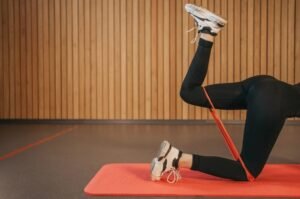
– Resistance Bands
If you want to challenge your body a bit more, resistance bands are a great step up from yoga. Even if you struggle to do a single push-up, resistance bands will help you increase your strength little by little, as they come in different sizes. They are extremely versatile and work equally well in the park or at home. They are also easy to use with plenty of workouts available online. A number of exercises can also be done while sitting, so now you have something to do during boring Zoom sessions!
– Running
If your fitness level isn’t great, running can be painful at first, but it can also become one of the most fulfilling forms of exercise you can do. With summer approaching and the weather getting sunnier, it’s a great time to pick up a pair of affordable running shoes and challenge your limits at the local park. Once you get over the initial hurdle and your body adjusts to the stress, running will show you its full benefits. It will give you a sense of accomplishment for breaking your previous records, clear your head, give you superhuman clarity of thought, benefit your lungs and heart, and help you shed some extra pounds. Also, it will make it easier to run after your bus.
– Gym Classes
If you struggle to be consistent in working out at home, the gym can help keep you motivated. It’s like a Netflix subscription for your body! Most gyms offer free classes aimed at keeping you fit and burning fat, usually lasting less than an hour (typically 30 minutes), so you won’t feel like a beginner. Just do whatever you feel comfortable doing and work your way up.
With many gyms reopening after restrictions, there will be plenty of discounts to encourage people to join. If gyms are still closed in your area, you can set up a gym at home and follow online fitness courses.
– Cycling
If you commute to your favorite coffee shop to start work, cycling there and back can be a fun aerobic exercise that will give your body a boost and grease your mental wheels. It’s also low-impact, so you won’t worry about stressing your joints or hurting yourself. Taking a bike around a green park on a sunny day will relax and invigorate you, while going for a quick ride before breakfast will boost your insulin levels and help you lose weight.
– Conclusion
Prioritizing your well-being isn’t just a luxury—it’s an investment in your longevity, productivity, and overall happiness. Whether it’s scheduling regular exercise breaks, practicing mindfulness techniques, or simply prioritizing nutritious food, every small step toward fitness is important.
As a freelancer, let’s nurture not only our work but also the most important asset we have—our health.